
October 2, 2026
How Much Off-Grid Power Do You Need for Desert Camping in Southern California?
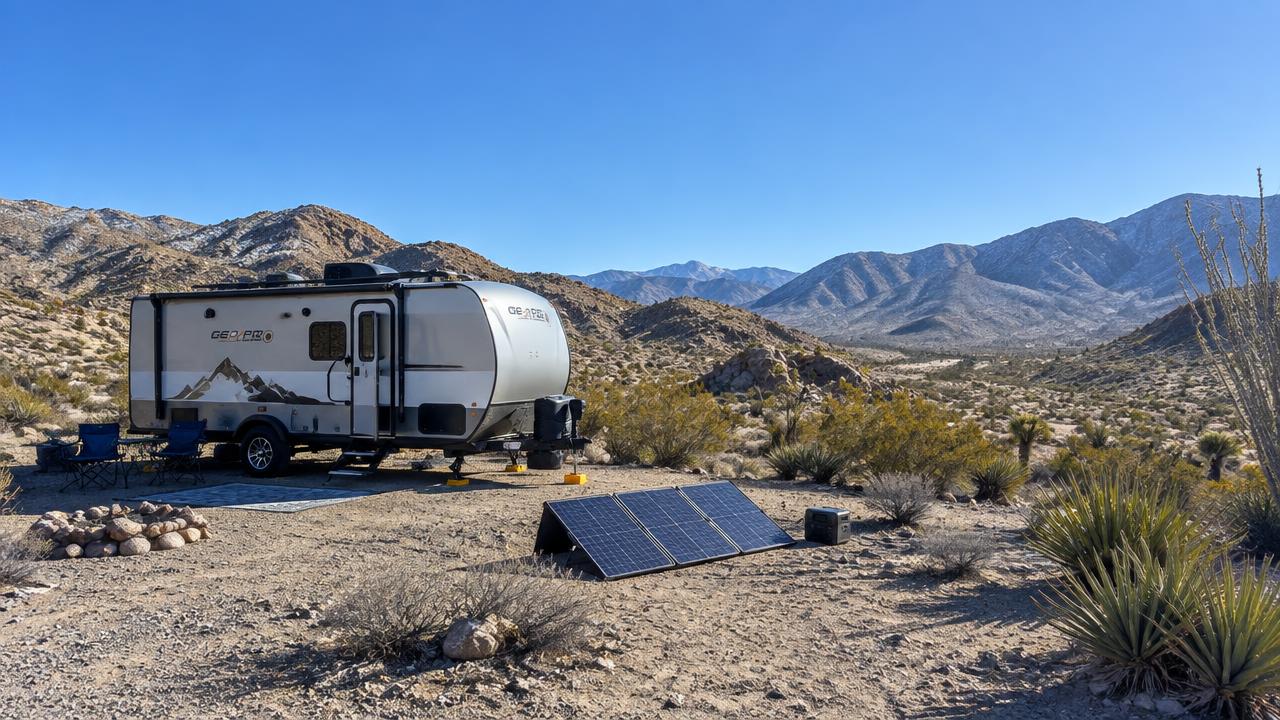
When the summer heat breaks, Southern California's deserts become some of the best camping anywhere. Fall through spring, owners head out to open spaces with no hookups, cool nights, and huge skies. The question that comes up again and again is how much power you actually need to enjoy it.
There is no single right number. The right system depends on how you camp. Here is how to work it out.
Start with what you use in a day
Power planning starts with your daily use, not with equipment. Make a list of everything that runs on battery and estimate how long each runs per day. Typical items include:
- LED lights and the water pump
- Furnace fan on cold desert nights, which can be a bigger draw than people expect
- Phones, laptops, and camera batteries
- A 12-volt or residential fridge
- A coffee maker, microwave, or hair dryer through an inverter
- Starlink or other internet equipment
Most devices list their power draw in watts or amps. Multiply by hours of use to get a daily total. Add a margin for days when you use more than planned. This number drives every other decision.
Batteries: how long you can go
Your battery bank is your fuel tank. The bigger it is, the longer you can go between charges. Lithium batteries have become popular because you can use more of their rated capacity, they handle frequent cycling well, and they are lighter than lead-acid for the same usable energy.
Cold matters too. Desert nights can drop near freezing in winter, and some batteries have charging limits in the cold. That is worth planning around.
Inverter: what you can run
The inverter turns battery power into household power for 120-volt appliances. Its size sets what you can run at the same time. A small inverter is fine for laptops and a TV. A microwave or coffee maker needs more. Size it for the largest combination of loads you realistically run together.
Charging: how you refill
Batteries only help if you can refill them. In the desert you usually have three options: solar, a generator, and driving with alternator charging. Many setups use more than one.
Solar is a natural fit out here. Clear desert skies make for strong production, though shorter winter days and a low sun angle mean less output than summer. Panel placement, shading, and dust all matter. A generator gives you backup for cloudy stretches or heavy loads.
Why components that work together matter
A lot of off-grid frustration comes from mismatched parts that do not talk to each other. Victron components are designed to work together, so the inverter, solar charge controller, and battery monitor share information. That makes the system easier to understand and easier to manage from your phone or a display.
A good battery monitor is especially valuable. It shows how much energy you have left, which takes the guesswork out of whether you can run the furnace all night.
What you can check yourself
- Track your actual use on your next trip, even roughly.
- Note which items you wish you could run but cannot.
- Check how old your batteries are and how they perform overnight.
- Look at how much roof space you have for solar.
- Decide whether you want a generator as backup or prefer to camp quietly.
When a generator still makes sense
Even with a solid solar setup, there are times a generator earns its spot: running air conditioning, recovering after several cloudy days, or powering heavy loads. Many owners carry one and rarely start it, which is a good place to be.
When to call a pro
If your batteries die overnight, your inverter faults, or you are planning a bigger system, it is time to bring in someone who designs these systems regularly. We are Off-Grid Victron Specialists and install solar and generator setups. Every job starts with a clear, detailed written estimate.
Planning for desert season?
Call (855) 589-7533 and we will help you size a system around how you camp.