
October 2, 2026
Restoring a Vintage Airstream in Southern California: What to Check Before You Start
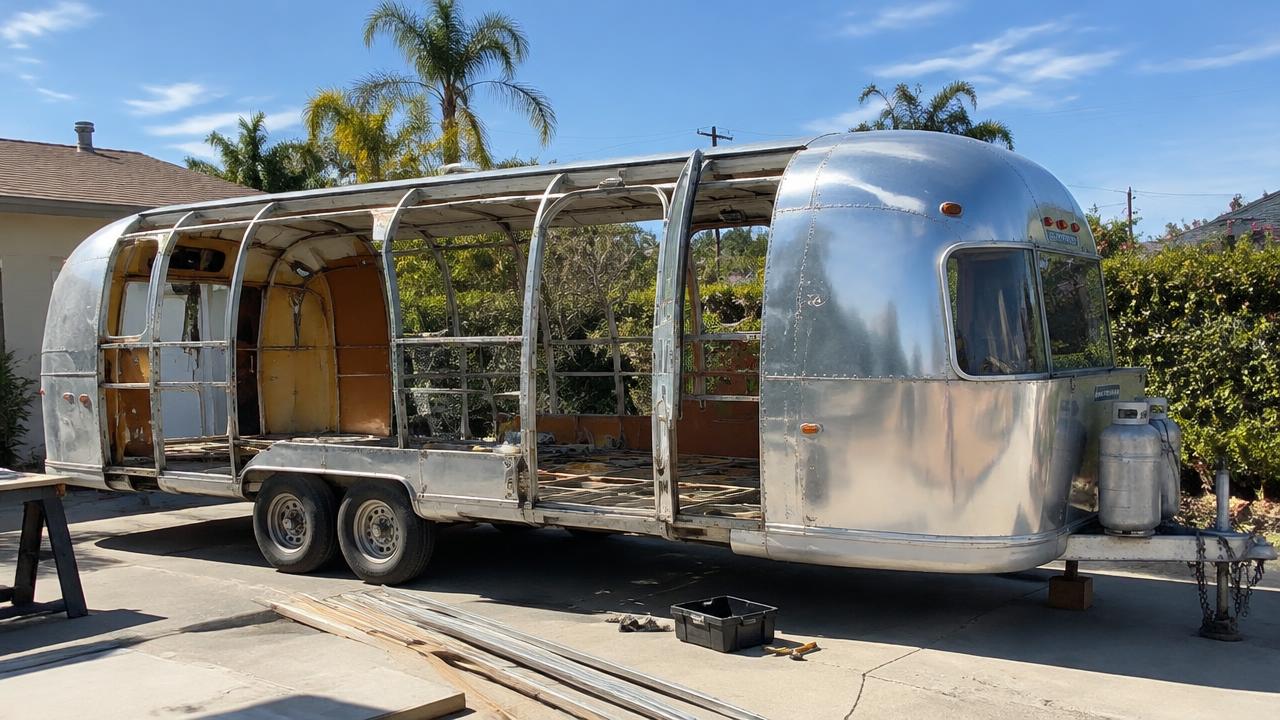
A vintage Airstream can look perfect from twenty feet away and still be hiding years of trouble. Southern California's dry climate is kinder to old aluminum than coastal humidity or snowy winters, but sun, heat, and the occasional hard rain still take a toll. Before you commit to a restoration, it pays to know what you are working with.
Start from the bottom: frame and subfloor
The steel frame and the plywood subfloor are the foundation of everything else. Problems here affect every other part of the project, so check them first.
- Look under the trailer at the frame rails, outriggers, and the rear section. Surface rust is common. Flaking, holes, or sagging are not.
- Pay special attention to the rear of the trailer. A sagging rear end is a well known issue on older Airstreams and can point to frame separation.
- Inside, walk the floor slowly, especially near the door, the bathroom, and the rear. Soft or spongy spots usually mean water damage.
- Check where the floor meets the walls. Rot often starts at the perimeter.
Follow the water: rivets, windows, and vents
On an older Airstream, leaks are rarely in one obvious place. Water finds its way in at rivets, window frames, roof vents, marker lights, and seams, then runs along the ribs.
Look for stains on interior panels, rusty screw heads, swollen wood, or a musty smell. Outside, check the sealant around windows and roof penetrations. In our heat and sun, sealants dry out, shrink, and crack faster than many owners expect. Seals that looked fine a few years ago can be brittle now.
A simple water test with a garden hose and a helper inside can reveal a lot, but go slowly and work from the bottom up so you can tell where water is getting in.
Read the aluminum
The outer skin tells its own story. Note dents, creases, previous patches, and any rivets that are missing or do not match. Look for oxidation, which shows up as a dull, chalky surface, and for spots of pitting.
None of this rules out a restoration. Aluminum body work is what makes these trailers so repairable. But it helps you understand how much body work is ahead and plan for it.
Original vs. modern systems
One of the biggest decisions in a vintage project is how much to keep original. Some owners want a faithful restoration. Others want the classic shell with modern comfort inside. Most land somewhere in between.
Electrical is a common place to update. Older wiring may be brittle, undersized for modern loads, or patched together by previous owners. Many owners choose to rewire and add modern charging, battery monitoring, solar, or a full off-grid system.
Plumbing is another. Old lines, tanks, and fittings can be tired, and modern components are easier to service. Decide early, because these choices affect what happens to walls, floors, and cabinets.
What you can check yourself
- Photograph the frame, floor, every window, and every stain before you start.
- Make a list of what works and what does not: lights, pump, water heater, fridge, outlets.
- Note every soft spot in the floor and every rivet that looks loose.
- Decide what you want to keep original and what you want modernized.
- Think about how you will use the trailer: weekends at a full-hookup park, or off-grid in the desert.
Plan with a clear estimate
Restorations go off the rails when surprises pile up. The best protection is a thorough inspection up front and a written plan that covers frame, floor, body, and systems. You may choose to do the work in phases, and that is fine, as long as each phase makes sense on its own.
We work on vintage and modern Airstreams, handle all of the body work, and build in the welding, electrical, and off-grid upgrades that restorations often need. Every project starts with a clear, detailed written estimate.
Thinking about a restoration?
Call (855) 589-7533. We will come out, look your Airstream over, and talk through what it needs.
Have questions about your rig?
Call (855) 589-7533